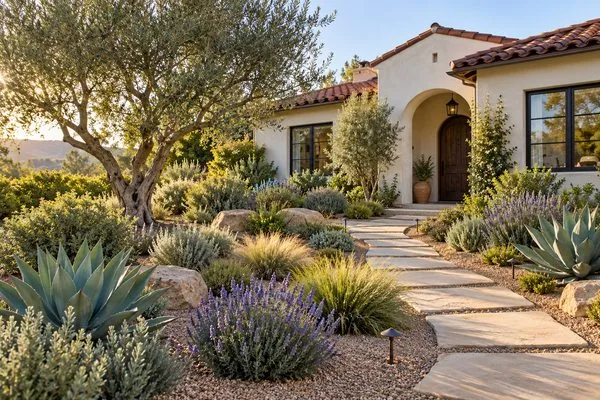
A striking, low-water front yard in Rancho Santa Fe starts with a plan, not a plant list. Good landscape design maps your sun, slope, and soil first, then fits drought-tolerant planting areas, hardscape, and irrigation zones together, so the yard looks refined from day one and does not need constant fixes later.
At Panjia Outdoors, we have been building outdoor spaces across North County San Diego since 2008, and every project starts with a free site visit. To plan yours, book a site visit with our team or call (888) 600-9270.
What makes landscape design in Rancho Santa Fe different?
Rancho Santa Fe asks more of a front yard than most neighborhoods do. It has to handle full sun and dry summers, use water wisely, and still fit the area's established, understated look.
Many homes here sit under the eucalyptus that have shaped the area's character for more than a century. Lots are large, often with long driveways, slopes, and a lot of exposed ground. A design that works on a small suburban lot can look thin and unfinished stretched across an acre.
Soil matters too. Much of the area has sandy, fast-draining ground that dries out quickly in summer, with heavier pockets on some slopes. Plants and irrigation need to be matched to what is actually under them.
If your home is in the Covenant, plan for review. Exterior changes, including some landscape and hardscape work, may need approval from the Rancho Santa Fe Association's Art Jury. Building that step into your timeline early keeps the project from stalling halfway.
Where does a real landscape design process start?
It starts with mapping the site. Before anyone picks a plant or a paver, a good designer walks the yard and notes where the sun lands, how the ground slopes, and where water goes when it rains.
Sun mapping shows which areas bake all afternoon and which stay shaded by trees or the house. Slope tells you where water will run, where erosion could start, and where a retaining wall or terraced bed might make sense.
Next comes how you actually use the space. Is the front yard just for arrival and curb appeal, or do you want a seating area, a courtyard, or a path that leads guests to the door? A long entry from the street can feel grand with the right walkway, or empty without one.
Only after those decisions does the design move to materials and plants. That order is what keeps a drought-tolerant yard from looking random. Each piece has a reason to be where it is.
Which drought-tolerant plants and hardscape work together?
The best low-water yards balance three things: plants with texture and color, hardscape that gives the yard structure, and open space that lets both breathe.
For planting areas, California natives and Mediterranean plants handle North County sun well. Think manzanita, ceanothus, sage, and deer grass, alongside lavender, rosemary, agave, and olive trees. Grouped in drifts rather than single plants, they read as intentional and calm, which suits Rancho Santa Fe.
Hardscape does the heavy lifting on a large lot. A paver walkway or motor court sets the tone at the entry, low seating walls can frame planting beds, and retaining walls can turn a tricky slope into usable terraces. Low-voltage LED landscape lighting brings it all forward at night.
If you still want a patch of green, artificial turf can give you that lawn look without the water bill, framed by planted borders so it feels like part of the garden.
Why does design-first planning save money?
Because piecemeal projects tend to undo each other. A new patio goes in, then the irrigation has to be rerouted, then a walkway gets cut through the plants you just bought. You pay for the same ground twice.
Planning the whole yard first means the hardscape, planting areas, lighting runs, and irrigation zones are laid out together. Plants with similar water needs share a zone, drip lines go where beds will be, and nothing gets torn out later.
We talked with one homeowner who wanted a front yard that was drought-resistant but did not want it to look like an airstrip. Instead of starting with a product, we asked about the colors and textures they enjoyed.
That conversation shaped everything else. They ended up with a garden they actually wanted, rather than one they were settling for. That is what a design-first approach buys you: a yard that fits your taste and your water budget at the same time.
How do you book a landscape design consultation?
Start with a site visit. We walk the property with you, talk through how you want the front yard to look and work, and follow up with a written, itemized estimate.
Bring whatever helps: photos of yards you like, a sense of your budget, and any Art Jury or HOA guidelines that apply to your property. If you have a survey or plot plan, that helps us map slope and boundaries faster.
Our own crews handle the build from start to finish, from demolition and base prep through the final walkthrough, so the hardscape, turf, and lighting go in the way they were planned. You can learn more about Panjia Outdoors, our family-owned company, and how we work.
When you are ready to turn a thirsty front yard into something striking and low-water, contact Panjia Outdoors or call (888) 600-9270 to schedule your Rancho Santa Fe design consultation.