Pet Turf Maintenance: What Keeping It Odor-Free Actually Takes Month to Month
One of the most common questions after a pet turf installation is how much maintenance it actually needs. The honest answer is more than nothing and less than natural grass. Understanding the real maintenance requirements before installation sets expectations correctly and prevents the frustration of a system that is not performing because the upkeep side was not part of the plan. Contact Panjia Outdoors at (888) 600-9270 with questions about what ongoing maintenance looks like for your specific setup.
What does routine pet turf maintenance actually involve?
Solid waste removal is daily. It cannot be left in place and hosed down. Solids need to be picked up on the same schedule as they would on any surface, and more frequently than most pet owners initially assume. Leaving solid waste on turf creates a hygiene and odor problem that no system, regardless of quality, can manage around.
Hosing the area down with water after pets use it is good practice and helps in the long run. Water alone is not sufficient for bacterial control, but daily or post-use rinsing keeps the system functioning better and extends the intervals between enzymatic cleaning applications.
Leaves and debris accumulate on turf the same way they do on any surface. Blowing or raking leaves off periodically, especially in fall, keeps the turf clean and prevents organic material from decomposing into the infill. Periodic grooming with a stiff-bristle brush or a turf rake helps lift fibers that have flattened under heavy traffic and keeps the surface performing consistently.
What does enzymatic cleaning involve and how often is it necessary?
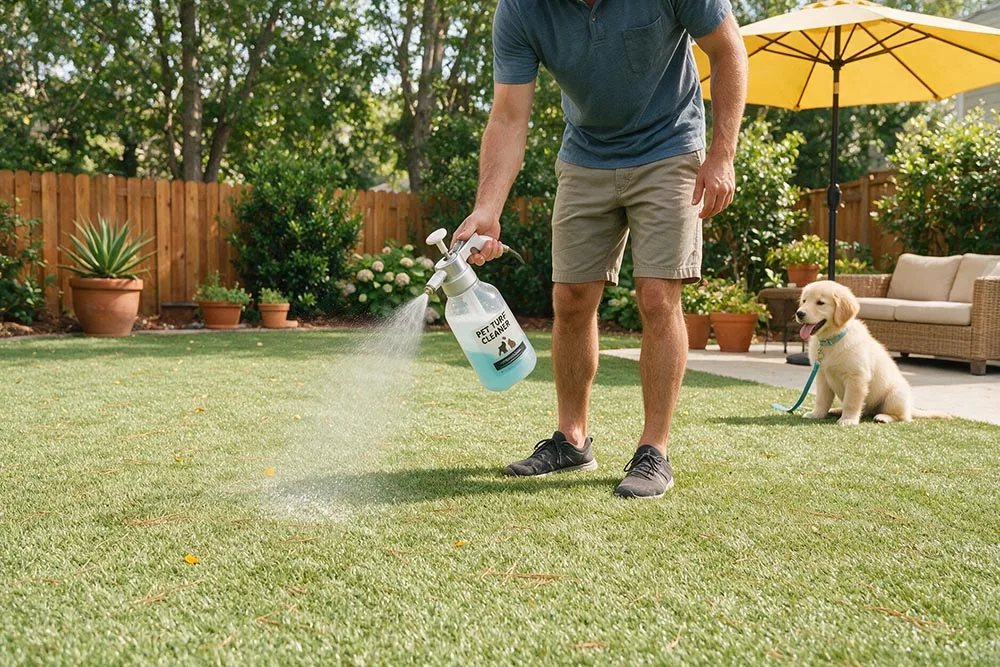
An enzymatic cleaner is the core maintenance product for a pet turf area. These cleaners contain enzymes that break down the organic compounds in urine, targeting the bacteria that produce odor rather than masking it. They are widely available at Home Depot and online, and application is straightforward: spray or dilute and apply across the turf surface, let it sit, then rinse.
Frequency depends heavily on use and the individual dog. Customers with moderate pet traffic apply enzymatic cleaner two to four times a year and find that sufficient. Customers with multiple large dogs or very active use, particularly during San Diego's warmer months, may apply it weekly or twice a week. Summer heat intensifies urine odor significantly; the same use level that requires quarterly treatment in January may require weekly treatment in August.
What maintenance tasks are easy to overlook?
Perimeter de-weeding is one. Weeds do not grow through a properly installed turf system, but they will grow along the edges between the turf and adjacent hardscape or fencing. Checking and clearing the perimeter periodically keeps the installation looking clean and prevents weed roots from working under the turf edge.
Checking seams and edges annually is worth a few minutes of time. A seam that is beginning to separate or an edge that is starting to lift is best addressed early, before foot traffic and pet activity work the gap wider. Contact Panjia Outdoors at (888) 600-9270 if a maintenance question comes up after installation. Providing guidance on the ongoing care of installed systems is part of the relationship.