Getting two or three quotes for a pet turf project and finding a $3 to $5 per square foot spread between them is common. The difference almost always lives in the base preparation and the infill, the parts of the installation that are buried under the finished turf and invisible once the job is done. Request a quote from Panjia Outdoors or call (888) 600-9270 to understand exactly what is included before comparing numbers.
What does a Panjia Outdoors premium pet turf installation include from start to finish?
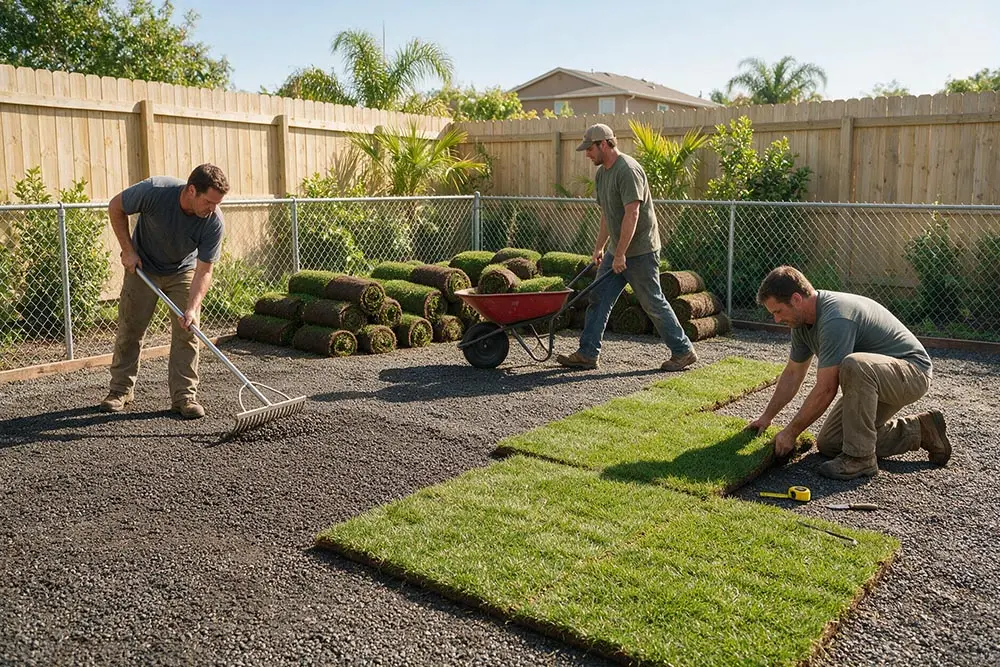
A premium pet turf installation starts with four to six inches of excavation. A two-inch gravel layer goes in first, followed by three inches of virgin road base, natural rock and fines free from cement dust and recycled asphalt. Both of those contaminants bind up over time and slow percolation, which is what makes cheap base material a long-term drainage and odor problem. The base is graded to direct runoff toward the existing or new drainage system before any turf goes down.
Once the base is set, the turf goes in. A premium product like Integriturf's Kennel Pro drains at over 900 inches per hour through a high-flow backing with an antimicrobial layer built into the material. The one-inch pile height keeps fibers upright, handles heavy pet traffic, and makes cleanup easier than taller-pile products where debris settles deeper into the grass.
Turf is secured using seaming tape, adhesive applied in an S-shaped seaming technique for a clean, invisible seam, and six-inch galvanized nails placed two to three feet on center throughout the field and every four to six inches along the perimeter and seams. Skimping on fastening is how edges lift and seams open over time.
The final step is infill. Panjia Outdoors uses acrylic-coated, non-absorbent antimicrobial infill that rinses through easily rather than retaining moisture and bacteria. The infill keeps fibers standing upright and adds weight to prevent thermal expansion and contraction from causing waves and wrinkles across seasons.
What do cheaper quotes typically leave out or downgrade?
Base depth is the most common cut. A quote specifying three inches of base instead of four to six is reducing excavation and base volume, which directly affects drainage performance and long-term stability. Some lower-cost installations use road base containing recycled asphalt fines, which are cheaper but create drainage problems over time as the fines compact.
Weed block fabric is another shortcut that appears in budget quotes as a feature. In a pet system it is a liability. Fabric installed over the base creates a layer that harbors bacteria and accelerates odor buildup. Panjia Outdoors does not install weed block fabric beneath pet turf for this reason.
Infill is where the long-term consequences of a cheaper installation show up most clearly. Standard silica sand is inexpensive and fine in non-pet applications. In a pet area it absorbs and retains moisture rather than rinsing clean, and it provides no antimicrobial benefit. Pet turf installed with silica sand will develop odor problems that are difficult and expensive to remediate after the fact.
How do you read a quote to understand what it actually covers?
Ask specifically about excavation depth, base material type and specification, whether weed fabric is included and where, the infill product by name, and the fastening method for seams and perimeter. A contractor who cannot answer those questions in detail is not a contractor who can explain what they are building. Contact Panjia Outdoors at (888) 600-9270 and we will walk through the specification of every component before you decide.