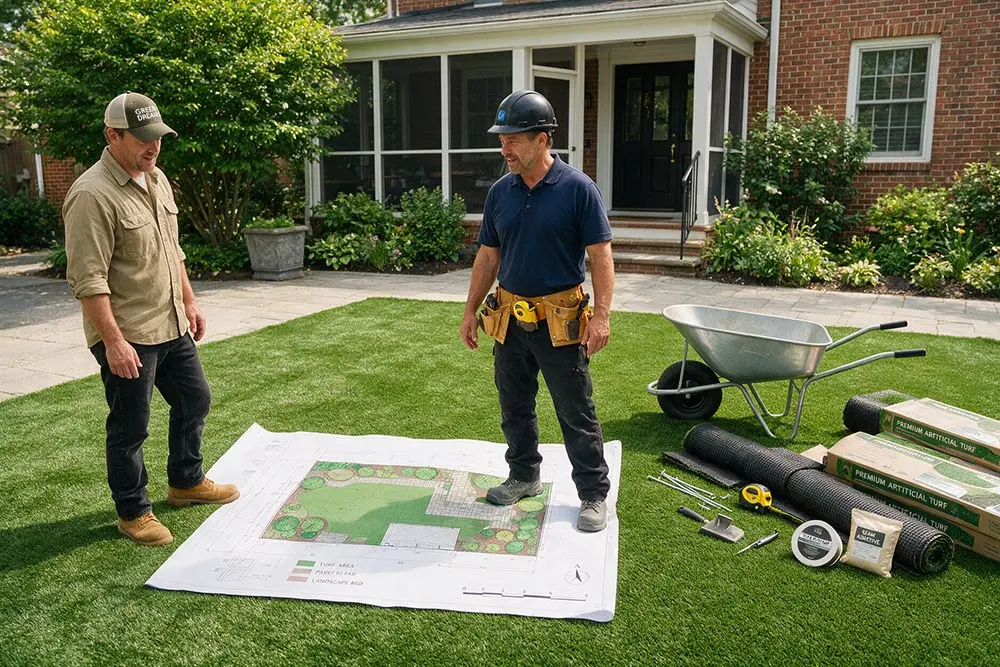
Most pet turf quotes come back higher than the homeowner's initial estimate, and it is rarely a surprise to the contractor who delivered it. The factors that add cost are usually visible during the site assessment. Understanding them before you get quotes helps you evaluate what you are being charged for rather than wondering why two quotes differ by $3,000. Request a quote from Panjia Outdoors or call (888) 600-9270 for a site assessment before making budget decisions.
How does site access affect the cost of a pet turf installation?
Access is the first thing a site assessment examines. If the installation area requires traversing stairs, passing through a narrow gate, or carrying material through the interior of the home, demolition and prep time increases meaningfully. Every load of excavated material that has to be carried up stairs or through a tight passage takes longer and involves more labor than a flat, open-access path.
The same applies to material delivery. Base rock, road base, and turf rolls all need to get from the truck to the installation area. A difficult access path slows that process and adds labor hours that show up in the quote.
How does the existing surface affect the quote?
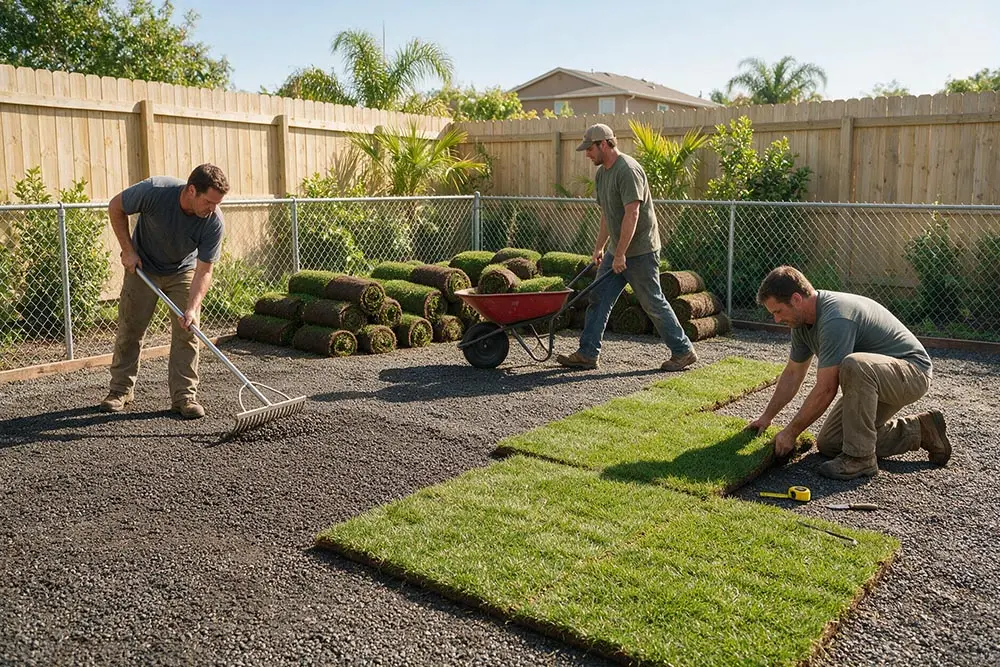
A lawn being removed adds predictable demolition cost. Concrete or hardscape being removed adds significantly more, both in labor time and disposal cost. Concrete is heavier to handle and more expensive to dispose of than organic lawn material.
Excessive thatch buildup in an existing lawn adds excavation depth and disposal volume. A lawn with decades of thatch accumulation may sit several inches higher than adjacent hardscape, requiring extra removal to bring the finished turf surface to the correct grade. Standard installation assumes removing three and a half to four inches of existing grass and soil. Significant overage requires more, and that additional excavation shows up in the quote.
What about tree roots and stumps?
Both add cost, and both are non-negotiable to address properly. Tree roots and stumps beneath a turf area need to be removed sufficiently deep below the finished surface. If left in place, they continue to decay, and decaying organic material beneath a turf system causes settling that creates an uneven surface and compromises base integrity. Panjia Outdoors identifies root and stump issues during the site assessment and includes necessary removal in the quote rather than encountering it mid-project.
How does drainage affect the project cost?
Drainage is one of the most underestimated cost factors in a pet turf installation. The base preparation and grading in a well-built system moves water toward drainage collection points. If no drainage infrastructure exists on the property, installing one adds meaningful cost. If existing drainage is inadequate for the volume a high-traffic pet area generates, upgrading it adds cost. And if drainage correction requires routing water through or around existing hardscape, the cost increases further.
The investment in drainage is directly tied to how well the system controls odor and performs over time. Urine that drains through quickly does not sit in the system and build up bacteria. A pet turf area without adequate drainage will develop odor problems regardless of turf quality or infill choice. Contact Panjia Outdoors at (888) 600-9270 before finalizing a budget. A site assessment identifies all of these factors upfront so the quote reflects the full scope of what the project actually requires.