Pet Turf Odor: What Actually Works Long-Term and What's Just Marketing
Odor control is the question that decides most pet turf purchases, and it is also the topic most cluttered with claims that sound good but do not hold up in a San Diego backyard with two large dogs and summer heat. Here is a straight answer on what a system needs to do to control odor over time and what each component actually contributes. Contact Panjia Outdoors at (888) 600-9270 to talk through the right system for your situation.
Why does pet turf smell, and where does the odor actually come from?
Urine odor in a turf system builds when liquid is not draining through quickly enough and when the materials it contacts absorb and retain moisture rather than rinsing clean. The smell is bacterial. Urine sitting in infill, wicking into base material, or pooling anywhere in the system creates the conditions where bacteria multiply and produce odor. Every component in a high-performing pet turf installation is chosen to move liquid through quickly and minimize what it leaves behind.
What does base preparation have to do with odor?
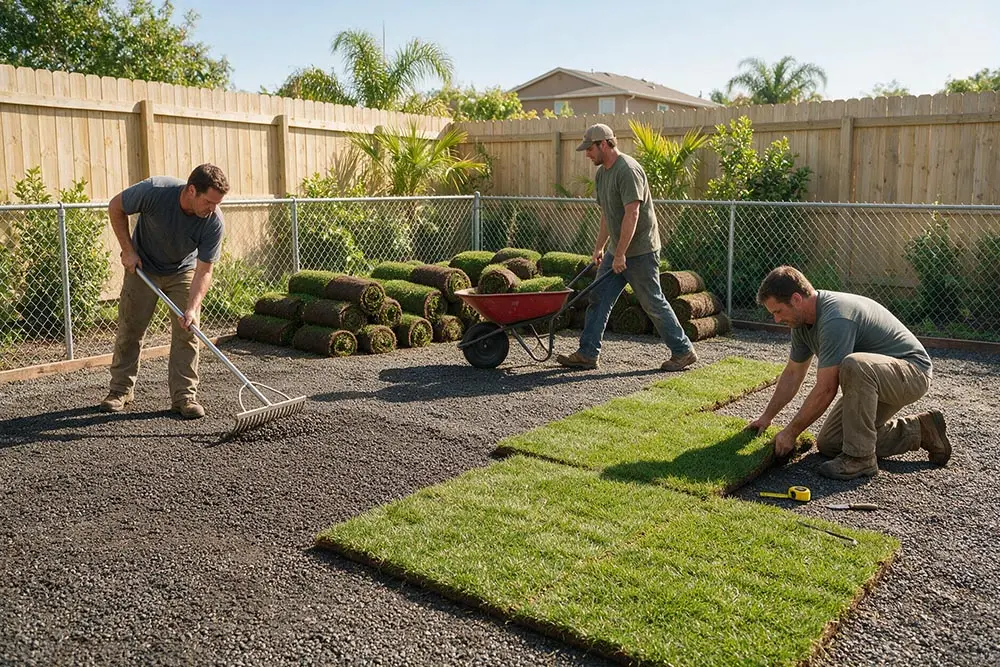
More than most homeowners realize. A base made with virgin road base drains significantly faster than one contaminated with cement dust and recycled asphalt fines. Those materials bind up over time and reduce percolation rate. As drainage slows, urine sits longer in the system and odor builds accordingly.
Panjia Outdoors also avoids weed block fabric beneath pet turf. Fabric between the base and the turf creates a layer that traps bacteria and moisture. It is a common shortcut in budget installations, positioned as a benefit, that actively works against odor control in a high-use dog area.
How much does turf drainage rate actually matter for odor?
Substantially. Standard turf products drain at roughly 30 inches per hour. Premium pet-oriented products like Kennel Pro, Torrey Pines 75 or 90, and Aloha 70 drain at over 900 inches per hour. The difference is in the backing: high-flow pet backings move urine through the turf and into the base almost immediately rather than allowing it to pool and sit in the pile.
For light pet use, the drainage rate difference matters less. For a heavy-use area with multiple large dogs, a high-flow backing is the single biggest factor in long-term odor management. Urine that passes through quickly has much less opportunity to interact with infill and base materials. See the turf products Panjia Outdoors recommends for pet areas.
What about infill: zeolite, Envirofill, TPE, or silica sand?
Silica sand is inexpensive and works acceptably in non-pet applications. In a pet area it retains moisture, provides no antimicrobial properties, and creates odor conditions that worsen over time. Using it in a pet turf installation to save money is a decision that creates a problem that is expensive and difficult to fix after the turf is down.
Zeolite is marketed specifically for pet odor because it absorbs ammonia from urine. The problem is in that same property: it absorbs. A saturated zeolite infill holds the odor source rather than releasing it, and once saturated, it requires replacement or extensive treatment to restore function.
Panjia Outdoors uses Envirofill and Optifill, both acrylic-coated antimicrobial products. The coating makes the infill non-absorbent, meaning urine does not wick into the material. It rinses through cleanly. The antimicrobial treatment limits bacterial growth on the infill surface. These products work with the drainage system rather than collecting what the drainage is trying to remove.
Are enzyme cleaners actually necessary, or is the system enough on its own?
A correctly installed premium system with high-flow turf, clean base, and antimicrobial infill will develop some odor in a heavily used area, particularly during San Diego's warmer months when heat amplifies urine smell. The system controls it significantly. It does not eliminate it entirely without maintenance.
An enzymatic cleaner applied periodically is the standard maintenance approach. Customers with moderate pet use apply it a few times a year. Customers with multiple dogs or very active use may apply it weekly or twice a week during summer. The individual dog's diet also plays a role: some dogs have more potent urine than others, which affects the cleaning frequency needed. Most enzymatic cleaners are available at Home Depot or online and are straightforward to apply. Contact Panjia Outdoors at (888) 600-9270 to discuss which system fits the number and size of your dogs.