Every pet turf project has budget constraints, and understanding which components absorb cost reduction without meaningful performance impact, and which ones do not, is how you get the most from your investment rather than discovering the wrong trade-offs a year after installation. Talk to Panjia Outdoors at (888) 600-9270 before making any product or scope decisions on a budget-sensitive project.
Where can a homeowner save money on pet turf without regretting it?
The turf product itself is where meaningful budget flexibility exists. The difference between a premium American-made turf and a quality imported product is real but not as large as the price gap suggests. Panjia Outdoors offers a professional line of imported grasses tested over many years in high-use applications. These are not the $0.99-per-square-foot products that look poor from day one and fail within a couple of years. They are mid-tier professional products that perform reliably and cost 30 to 50 percent less than American-made pet turf options. Drainage rate is lower than the domestic premium products, but for moderate pet use, it is not a meaningful limitation.
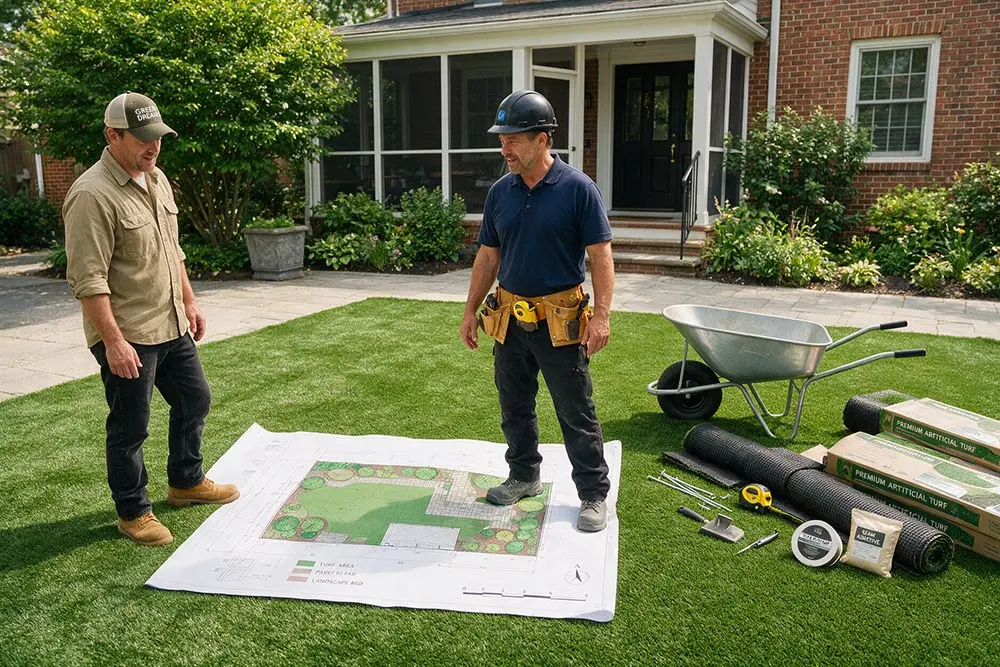
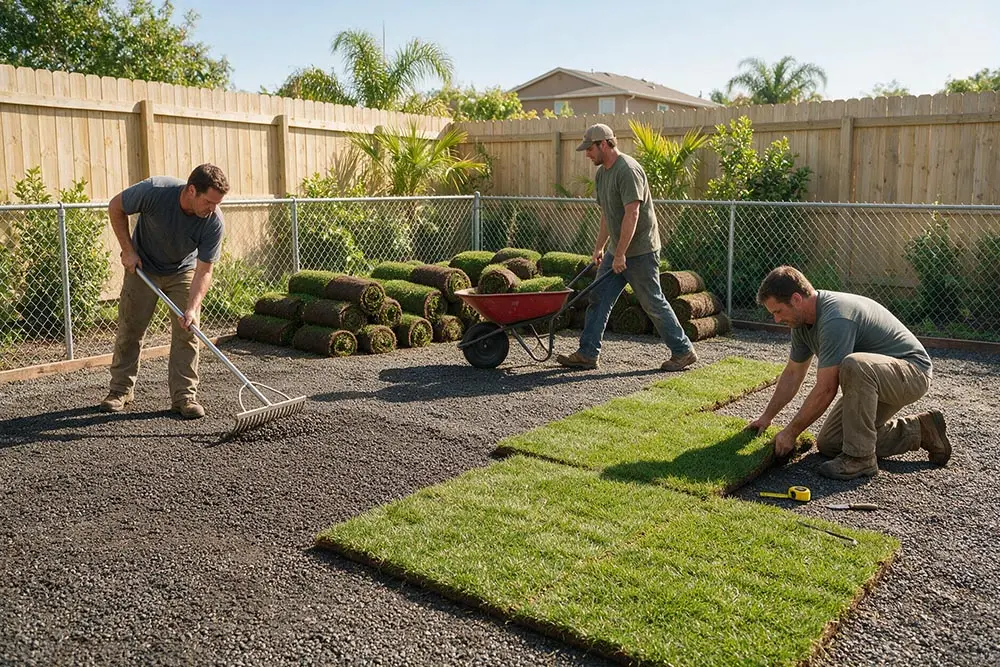
The demolition preparation is another area where budget-conscious homeowners can reduce cost. If a gardener or other capable labor can remove the existing lawn and soil to prepare the area for base work, that reduces the billable labor hours for the professional installation. This is one of the less technically critical steps. The base preparation itself, the engineered base material, compaction, and grading, requires the professional crew.
Where should you never cut costs on a pet turf installation?
Infill is the component where shortcuts create problems that are expensive and disruptive to fix after installation. The infill goes down last and sits inside the turf fibers for the life of the system. Using standard silica sand in a pet area because it is cheaper is the single most common cause of avoidable odor problems in turf installations. Silica sand retains moisture and provides no antimicrobial benefit. Replacing infill after installation requires pulling the turf, removing and disposing of the old infill, and reinstalling everything. The cost of that remediation far exceeds the initial savings.
The amount of infill also matters. Installations that use insufficient infill create wrinkles, premature fiber matting, and an uneven surface over time. Infill holds the fibers upright, adds weight that keeps the turf stable through temperature changes, and is structural to the system's long-term performance.
Installation labor quality is the other area where cutting costs creates disproportionate consequences. Improperly secured turf, with inadequate seaming or insufficient perimeter fastening, will lift and separate. Seams that open in the middle of a yard are both visually obvious and structurally problematic. A poorly prepared base produces an uneven surface that no amount of product quality can compensate for.
What does the smart budget decision actually look like?
Choose a quality imported turf over the premium domestic option, include the antimicrobial infill at full specification, and do not compromise on base preparation depth or material quality. That combination delivers a system that performs reliably without the odor or structural problems that create expensive remediation projects later. Contact Panjia Outdoors at (888) 600-9270 and describe your budget. We will tell you honestly where the money is best allocated for your specific project.